Why Containerized Car Transport is the Future of Sustainable Car Logistics
In the evolving landscape of automotive logistics, the method of transporting vehicles has undergone significant transformation. Among the various options available, Kar-Tainer's exterior loading concept has emerged as a leading solution. This approach offers numerous advantages over traditional methods of the past, particularly in terms of security, protection, and efficiency. As the automotive industry continues to globalize and demand for reliable sustainable shipping solutions grows, containerized transport is positioned to become the standard for vehicle logistics.
Advantages of Car Transport in Containers
Transporting cars in containers provides a controlled environment that safeguards vehicles from external elements and potential damage.
Some key advantages include:
Enhanced Protection: Containers shield vehicles from rain, dust, salt, and other environmental hazards.
Security: Locked containers reduce the risk of theft or vandalism during transport.
Versatility: Containers can be stacked and transported via multiple modes including ship, rail, and truck.
Standardization: The use of standardized container sizes simplifies handling and logistics planning.
Reduced Damage Claims: The enclosed environment minimizes the likelihood of scratches, dents, or other damage.
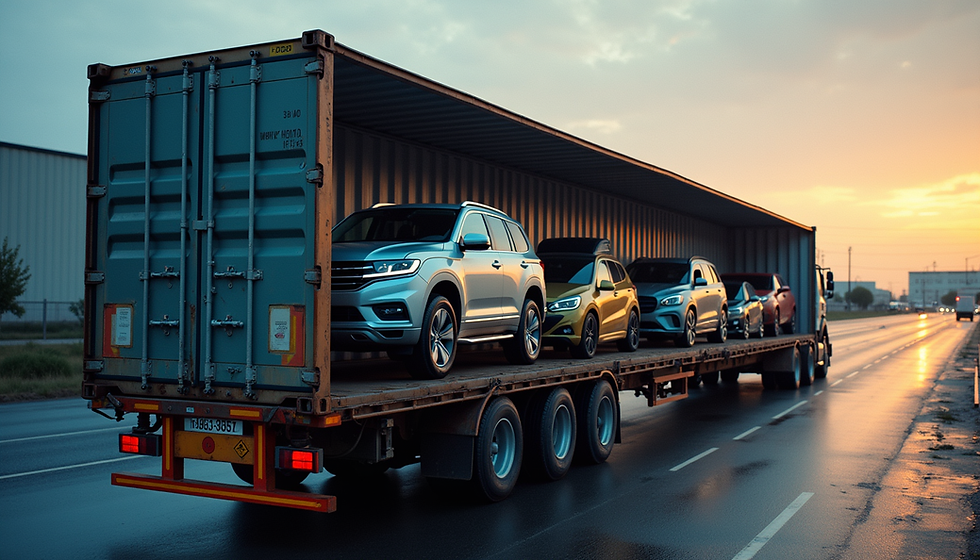
Exterior Loading: The Kar-tainer sustainable solution stands alone in being the only solution where personnel do not enter the container during loading, and therefore cars can be pre-staged in any volumes, on the self-supporting cassette. Reduced handling leads to reduced damages.
These benefits translate into cost savings and improved customer satisfaction for automotive manufacturers and logistics providers.
The Growing Role of Car Transport in Containers
The automotive industry’s increasing reliance on global supply chains has amplified the need for reliable and scalable transport solutions. Car transport in containers is becoming integral to this process. Manufacturers and logistics companies are adopting containerized methods to streamline operations and reduce transit times.
Containerized transport supports just-in-time manufacturing by ensuring vehicles arrive at assembly plants or dealerships on schedule. It also facilitates international shipping, where container handling infrastructure is well-established at ports worldwide. This compatibility reduces delays and handling costs.
Moreover, containerized transport aligns with sustainability goals. By optimizing space and enabling multimodal transport, it reduces carbon emissions per vehicle shipped. This efficiency is critical as the industry faces mounting pressure to lower its environmental footprint.
The Future Outlook for Containerized Vehicle Solutions
The future of automotive logistics is closely tied to innovations in containerized transport. As global trade expands and vehicle designs become more complex, the demand for secure, efficient, and adaptable transport solutions will grow. Containerized car transport offers a scalable platform that can evolve with industry needs.
Emerging trends such as electric vehicle shipments, autonomous vehicle logistics, and digital supply chain integration will further drive the adoption of containerized methods. Companies like Kar-Tainer are at the forefront, continuously developing advanced container solutions that meet these challenges.
In summary, containerized car transport is not just a current best practice but a strategic investment in the future of automotive logistics. It provides a robust framework for safe, cost-effective, and environmentally responsible vehicle transport worldwide.

By embracing containerized car transport, the automotive logistics sector can achieve greater operational excellence and meet the evolving demands of a global market. This approach ensures vehicles arrive in pristine condition, on time, and with optimized resource use, securing a competitive advantage in a dynamic industry.
Check for yourself: www.kar-tainer.com


Comments